Saturday, November 7, 2020

Saturday Serendipity (November 7, 2020)


On this Saturday in November, when Joseph R. Biden and Kamala Harris have just been projected as the President-elect and Vice Preseident-elect in one of the hardest fought, most consequential campaigns in our history, here are a few suggested reads for the remainder of your weekend.  We are likely in for a rough ride through the next weeks and months as the transition proceeds toward the inauguration on January 20, 202, but ultimately, if history teaches us anything, it is that the country will settle down and ever so slowly work its way back to being more American than tribes of red and blue.  We can only hope and work toward that goal.

1.   Many of us have ancestors and relatives who might have been members of various fraternal organizations such as the Freemasons, Moose, Odd Fellows, etc.  In the past many of such organizations were referred to as "secret societies."  The Weekly Genealogist this week linked to an article titled, The Independent Order of Odd Fellows: A Secret Society That Left a Trail of Human Skeletons in Its Wake."  Read this interesting piece by going here

2.   All of us who have used handwritten documents in our genealogy research (which really means anyone and everyone who does genealogy research) has struggled at one time or another to make out just what the handwriting says.  James Tanner, of Genealogy's Star blog, posted part two of his reading handwritten documents post.  Read the current post and get a link to part one by going here.

3.   Good advice this week from Janine Adams, of Organizing Your Family History blog, with her post "Ancestry Users: Don't Forget to Check Family Search."  Read her post here.

4.   With Veterans Day almost upon us, it is time again to become aware of Heather Rojo's Honor Roll Project–and perhaps consider offering a contribution to the project.  If you are not yet aware of what the project is, read Heather's post here of the Webster, Massachusetts Civil War honor roll on Nutfield Genealogy blog and see an example of how you could also contribute to the project.  You can get a link to the project itself in Heather's post.

5.   The Weekly Genealogist also linked to a story about one of the top ten map libraries in the United States.  The Osher Map Library and Smith Center for Cartographic Education in Portland, Maine contains 500,000 maps with some dating back to 1475.  It has been referred to as having "certainly the strongest [map] collection in Northern New England."  Read more about the library, its collection, and the online collaborative effort called Mapping a World of Cities by going here.

6.   And finally, during this time of turmoil surrounding this pivotal election, it is worth looking back in history to see that we the people of the the United States of America have weathered political storms before.  It can take time and there could be more turmail ahead, but we always come through it and we will this time–given time.  Read this post at Cow Hampshire blog for some historical perspective.


_ _ _ _ _ _ _ _ _ _ _ _ _ _ _ _ 

Copyright 2020, John D. Tew
_ _ _ _ _ _ _ _ _ _ _ _ _ _ _ _

Tuesday, November 3, 2020

Dear Descendants: Election Day 2020


Dear Descendants:

By now you know that the digital blog I wrote during the early years of the 21st Century was printed in multi-volume book form in order to preserve it and pass it on to you and others.  At least three hard-bound copies were produced and two of them were given to my sons, Jonathan and Christopher.  As I have stated in earlier posts, the blog was never intended in any way to be a political treatise or diatribe. [See, the posts dated November 9, 2016 and January 20, 2020]  The blog is a genealogy/family history blog devoted to those subjects generally and more specifically to posts about our deep American family roots.  

The above having been said, there are events that I experienced during my life that undoubtedly will be of historical significance and something you will have learned about as events of the past.  I have often wished that I had some concrete evidence such as a diary or letter by an ancestor that told me (good or bad) how he or she felt about significant events and issues.  I would be thrilled to have some definite evidence of what an ancestor believed about the enslavement of people in America at the time.  Similarly, I would like to know for sure how an ancestor reacted to the forced removal of the Cherokee people and the Trail of Tears or who an ancestor voted for in the election of 1832–Andrew Jackson, Henry Clay, or maybe the Anti-Mason candidate William Wirt–and why; but I do not have answers to those kinds of questions.  So this blog occasionally posts my experience and views for my posterity so they need not wonder where I stood on issues and events of my days.

As I wrote in a post dated January 28, 2017, ". . . I should go on record as saying I am neither a registered Republican nor a registered Democrat.  I am an American whose family [your family too] on both my mother's and my father's side have been in America since 1620 and 1640 respectively.  I am invested in America!"  Today is one of the most significant days on the calendar of American life.  It is the day of the quadrennial national elections and this one pits Joseph Biden (Democrat) against Donald Trump (Republican and incumbent president) for the office of President of the United States.  I believe it to be the most important and consequential election of my life to date and as I began drafting this post at 7:00 AM I felt I had to make my choice explicit for you, my descendants, to judge.  

I voted for Joseph Biden.

Contrary to the hope I expressed in my post dated January 9, 2016, Donald Trump has not evolved and grown in office these last four years.  He has been impeached and has continued his blustering, bullying, name calling and very un-presidential ways.  But more importantly he has led an administration of corruption, incompetence, and when it comes to the handling of the COVID pandemic (of which you will undoubtedly know more about the ultimate outcome than we do as I write this) he has failed at the paramount duty of a president -- to keep the country and its residents safe.  A litany of all the ways that I believe these descriptions of Mr. Trump's performance in office are so, would be too long to post here.  Your history books will have examined and judged the validity or deficiency of my beliefs; what matters for the purpose of this post is to tell you clearly that I voted against Donald Trump for what I believe to be the sake of you, my descendants, and for the sake of a continued healthy democracy in this country.

The next several hours of this Tuesday, November 3, 2020 will probably not give us a definitive result in the presidential election because the country is so divided on the question of whether or not Mr. Trump and his party deserve another four years in office, that hundreds of lawsuits have been filed and threats have been made about contesting the results once they are in.  I sit right here, right now, refusing to believe that the American people writ large will ultimately look at the last four years and re-elect Mr. Trump and his party back into power.  I fervently hope that this proves to be true, but if not then you all will at least know where I stood and that I did what I could to prevent another four years under what I consider to be the most incompetent, self-absorbed, and self-promoting president in my life thus far.

_ _ _ _ _ _ _ _ _ _ _ _ _ _ _ _ 


Image of man writing with feather quill pen from https://www.kissclipart.com/quill-pen-clipart-paper-quill-pen-i1r57s/
_ _ _ _ _ _ _ _ _ _ _ _ _ _ _ _ 

Copyright 2020, John D. Tew
_ _ _ _ _ _ _ _ _ _ _ _ _ _ _ _ 

Saturday, October 24, 2020

Saturday Serendipity (October 24, 2020)


Here area few recommended reads for this weekend.

1.   I have always enjoyed the writing and musings of Jacqi Stevens at A Family Tapestry blog.  She is informative, entertaining, and a good writer.  Today she posted about embarking on a new experience in her piece, "Diving In: Can't Swim Without Risking Sinking."  You can read her musings here

2.   An Gorta Mor -- The Great Hunger and discoveries using mtDNA . . . Janice A. Brown, of Cow Hampshire blog, writes an engaging piece about both this week.  You can read her post and learn what An Gorta Mor is by going here.

3.   James Tanner, of Genealogy's Star blog, links us to this article "Billions of Digital Images and Associated Text Metadata Created Through the United States National Archives and Records Administration's Digitization Partnership Program" and he suggests we all read it. You can read his introductory post and get a link to the suggested article by going here.

4.   If you are incorporating DNA research and data into your genealogy, then you should read Judy Russell's take on recent modifications to the Board for Certification of Genealogists (BCG) view of ethical use of DNA evidence. Read the 2018 BCG standard and the new October 2020 modification, along with Judy's personal take on the changes here at The Legal Genealogist blog.

5.   Nancy Messier, of My Ancestors and Me blog, does the service of bringing to our attention and reviewing the FamilySearch Campaigns that can offer links for further information or documents to consider in your research.  Nancy lists and provides the links for the currently available campaigns, and she emphasizes that the campaigns change over time and might not be available in the future.  You can read her post here.

6.   Do you or your friends and relatives think you are obsessed with Genealogy?  This week The Weekly Genealogist of American Ancestors/NEHGS linked to the article "Why Are Americans Obsessed With Genealogy?" in Psychology Today.  You can find out the reasons for your obsession by going here.   And if you have Mayflower ancestors, you will be interested to read another linked article in The Weekly Genealogist–"Do the Pilgrims Still Matter?" is in the November issue of Yankee magazine and you can read it here.

 _ _ _ _ _ _ _ _ _ _ _ _ _ _ _ _

Copyright 2020, John D. Tew

_ _ _ _ _ _ _ _ _ _ _ _ _ _ _ _ 


Thursday, October 22, 2020

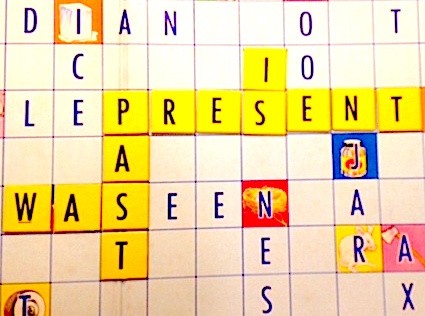
Revisting The Issue of Tense in Writing About Ancestors (October 22, 2020)


Five years ago today I posted a piece titled, "Was" or "Is" .  .  . What Tense Makes Most Sense For One's Ancestors?   Just over a week ago, I received a comment on that post from someone identified only as "Mark A."  Mark said, "I have just heard reference to an actual 'ancestor tense' - apparently used by native Americans when speaking of ancestors. I don't know which tribes, however; I merely stumbled across this while watching the film Home From Home by Edgar Reitz, where one of the characters discovers this while reading a book."

Mark's comment about a possible "ancestor tense" was intriguing and I spent a half hour or so trying to find more about this grammatical anomaly.  I was unsuccessful in finding anything specifically referenced as an ancestor tense used by Native Americans of any tribe, but the idea stuck with me and caused me to muse again about the tenses we use when referring to ancestors–especially deceased ancestors.  [The film that Mark referenced is actually a German film and apparently a character in the film makes some mention of an ancestor tense based on a book the character is reading.  I have not as yet been able to find a place to watch the film myself and so at this point I just have Mark's observation to go by.]

The idea of having a grammatical tense to use specifically when discussing ancestors is fascinating and one wonders how it would work in practice and if any convenient analog could ever develop in English.  But leaving that aside until more could be learned about any ancestor tense actually being used by Native Americans, I found myself re-reading my original post and the comments it generated.  Now, having thought more on the subject, I am even more convinced that the best tense to use when referring to ancestors–living or deceased–is the present tense.

In musing more on the subject, I am convinced that accuracy and logic dictate the use of the present tense when discussing an ancestor .  .  . and perhaps especially when discussing a long deceased ancestor such as a 5X great grandparent, for example.  Two new thoughts occurred to me: 

          (1)  Due to the power of two, once one gets to talking about ancestors further back than grandparents, the number of individuals sharing the same relationship grows dramatically–as do the surnames involved.  Biologically speaking, while each of us has two parents, we have four grandparents, and going back further we have thirty-two 3X great grandparents, five hundred twelve 8X great grandparents, 1,024  9X great grandparents . . . and on and on. 

                (2)  In most cases, anyone above the great grandparent level while living would have had no inkling about our present existence, let alone any idea of a relationship to themselves.  My 4x great grandfather, John Tew, Sr. who died in 1827, is one of my 32 4X great grandparents.  There is no way that he could ever have envisioned the six generations, the marriages, and the intervening families that ultimately resulted in my birth and created a relationship to him.  Perhaps more starkly, my 4x great grandfather on my mother's side, James Carpenter who died in 1812 (my mother's 3x great grandfather), would never have envisioned becoming the 4X great grandfather of someone named John Tew.

Taken together, the above two observations clarify why the present tense is perhaps the best tense to use when talking about ancestors.  The logic of the present tense is captured in the use of the word "becoming" in the last sentence of paragraph 2 immediately above.  When each of my named 4X great grandfathers was alive, he did not have any relationship to me because I did not yet exist and he could not have even imagined me.  Each of them only became one of my many 4X great grandfathers after I was born (and when I discovered and confirmed our relationship).

At present I am one of the two grandfathers of my granddaughters and upon their births John Tew, Sr. and James Carpenter became two of their 6X great grandfathers (along with 126 other 6x great grandfathers). It seems both illogical and inaccurate to say that either of them "was" my 4X great grandfather (or my granddaughters' 6X great grandfathers) because it implies either that retationship existed back when they did exist (and it simply did not), or it implies that at one time they had the relationship of a great grandparent to me, but that the relationship somehow no longer exists if I should say "he was my 4X great grandfather."  Once someone becomes a great grandfather, the simple, natural fact that he happens to be dead when one of his descendnats is born does not erase that relationship because he only became a great grandfather to that descendant when that remote descendant was eventually born. Looking at it another way, while I am presently a grandfather, there is no guarantee that I will ever become a great grandfather, let alone a several times great grandfather; but, if in the fullness of time and a continuation of generations from my grandchildren, when other descendants are born, then at that moment (and not before) I will become an ancestor and the relationship will be established so that those descendants for the first time can say John D. Tew is one of my ___ great grandfathers.

_ _ _ _ _ _ _ _ _ _ _ _ _ _ _ _

Image created by the author using the family's 1958 edition of "SCRABBLE For Juniors" manufactured by Selchow & Richter Co. for The Production and Marketing Company (the copyright owner).

_ _ _ _ _ _ _ _ _ _ _ _ _ _ _ _

Copyright 2020, John D. Tew

_ _ _ _ _ _ _ _ _ _ _ _ _ _ _ _


Saturday, October 17, 2020

Saturday Serendipity (October 17, 2020)


Today is 87 years from the day in 1933 that Albert Einstein moved to the United States (after renouncing his German citizenship) to take a position in the Institute for Advanced Study at Princeton University.  

Here are some suggested reads for this weekend.

1.   For those with early New England roots, Vita Brevis, the NEHGS blog, recently posted a teaser by Alicia Crane Williams.  A gift of access to the digital manuscript collection of Barry E. Hinman (Emeritus Librarian at Stanford University) has been made to NEHGS.  The material consists of draft pieces on his ancestors and includes some 600 drafts of his New England ancestors from Massachusetts, Connecticut, and Rhode Island.  You can read more about this gift here.

2.   James Tanner, of Genealogy's Star blog, shares his insight and musings on the digital divide and computer literacy as it relates to genealogy research.  You can read his post here.

3.   For those with connections to–or just and interest in Maine–The Weekly Genealogist of NEHGS highlighted an article in Downeast Magazine titled, "Why Maine Became a State (And Not a Commonwealth)."  You can read the article here.

4.   Those who have read this blog for any length of time know that I have long had a consuming interest in the Great Influenza of 1918 (mistakenly referred to as the "Spanish Flu" in my opinion).  I have blogged about it several times since the first post in 2013 (see "Influenza" in the topics list).  I read everything I come across about the 1918 pandemic.  Recently Molly Charboneau, of Molly's Canopy blog, posted an introductory piece about the beginning of the flu pandemic that eventually killed her Uncle Albert.  A follow-up future post about the spread of the flu is also planned.  You can read Molly's post and get a link to her post about her uncle's death by going here.

5.   Deep Work, learning by osmosis, mind mapping, outline thinking, and being a stalk of celery in a water glass receiving a drop of blue food dye.  .  . intrigued?  So was I.  Jacqi Stevens of A Family Tapestry blog, muses on different learning styles and how to cope with trying to do concentrated, focused work while retaining the ability to explore without getting lost.  Read "Off the Shelf: Deep Work" here.  

6.   If you are not familiar with early Colonial-era town pounds and the function and revenue source they represented, then you should read Heather Rojo's post at Nutfield Genealogy, where you can also surf links to the other posts in her series on town pounds.  This week Heather highlights the 1774 Town Pound of Loudon, New Hampshire.  See it and read about it here

STAY HEALTHY, STAY SAFE, AND PROTECT OTHERS -- WEAR THAT MASK!

_ _ _ _ _ _ _ _ _ _ _ _ _ _ _ _

Copyright 2020, John D. Tew

_ _ _ _ _ _ _ _ _ _ _ _ _ _ _ _ 
Saturday, October 10, 2020

Saturday Serendipity (October 10, 2020)


Here are a few suggested reads for this weekend before Columbus Day.

1.  Jaqui Stevens, of A Family Tapestry blog,  posted an interesting piece titled "Writing to Family You've Never Met."  She muses on the changing nature of genealogy research in the internet age and the intimidating act of reaching out to strangers even if related to you.  Read her post here.

2.   With the background in recent years of the growing anti-vaccination crowd and the concern about Operation Warp Speed today, a very timely and interesting post from Jane Roberts, of PastToPresentGenealogy blog, discusses the history of vaccinations in Great Britain and the naming of children.  Go here to see how the author weaves these two subjects together!

3.   One of my great research faults is the accumulation of materials with relevant information and then the failure to process them expeditiously.  Reminders about the importance of processing as soon as possible are always valuable and Janine Adams, of Organize Your Family History blog, provides a valuable lesson of why immediate processing in the long run saves the time you think you don't have when you first gather the materials.  If you thought the material was worth saving at the time, then it definitely should be processed then and there or ASAP.  Read here why Janine thinks she and we would process materials ASAP.  [And Janine also provides an easy solution to shadows in your genealogy photos and how to eliminate them here.  Scroll to the bottom of the post to her solution illustrated.  It is simple and you will think, "Of course.  Why didn't I think of that?"]

4.   "Bite-Sized Family History Projects" – a catchy post title by Marian Burketts Wood, of Climbing My Family Tree blog.  You can read Marian's piece here.

5.   And as this pandemic gains new ground and is about to converge with the annual flu season, this post by James Tanner, of Genealogy's Star blog, should be must reading for those literate mask and social distance deniers.  Pass it on.

6.   The Legal Genealogist, Judy Russell, is always vigilant regarding matters of copyright and public availability of information.  Once again she brings to our attention an example of overreach into use of public records -- this time by New York City.  Read "Um . . . a retreat by NYC?" here.

_ _ _ _ _ _ _ _ _ _ _ _ _ _ _ _ _ 

Copyright 2020, John D. Tew
_ _ _ _ _ _ _ _ _ _ _ _ _ _ _ _ _

Friday, October 2, 2020

Censored! A World War II "V . . . – Mail"


This past Sunday the Rhode Island Genealogical Society (RIGS) held a virtual meeting using Crowdcast online in order to have a continuation of operations during this ongoing Corona virus pandemic.  The meeting included two excellent presentations-- one by Thomas and McEntee and the other by Kathleen Kaldis.  During her presentation, Kathleen mentioned almost parenthetically that her father had served in the Merchant Marine during World War II.  She added that while the losses suffered by those serving in the Merchant Marine during the war accounted for the highest per capita loss of any uniformed service, those in the Merchant Marine were not considered "veterans."  This is partially true.

As previously covered in other posts on this blog, recognition of the service of those who served in the Merchant Marine during WWII was slow in coming and in some ways incomplete (see the earlier posts here, and here).  President Franklin Roosevelt had promised mariners of the U.S. Merchant Marine and the Army Transport Service that they would be granted veteran status and a Seamans Bill of Rights for their WWII service .  .  . but the promise died with the President.  It was not until many years later that mariners of the U.S. Merchant Marine who served in WWII were granted some limited benefits and official recognition.  For example, they were granted the honor of WWII service medals and the qualification to be buried in a national cemetery (other than Arlington), but they were not allowed health or other benefits.

The Battle of the Atlantic during WWII has been called the longest continuous military campaign of World War II and as Winston Churchill later stated, "The Battle of the Atlantic was the dominating factor all through the war. Never for one moment could we forget that everything happening elsewhere, on land, at sea or in the air depended ultimately on its outcome."  During this period, the Allied naval forces attempted a blockade of Germany while at the same time the merchant ships were doing their utmost to move cargo across the Atlantic to keep military forces supplied with weapons and other materials needed to sustain Allied efforts.  Germany responded to the blockade and to the supply efforts with a concerted and continuous attack against Allied naval and merchant ships.  They used U-boats (submarines), surface vessels and Luftwaffe aircraft.  From 1942 onward, German forces were especially directed at preventing a build-up of equipment and supplies that would support any Allied attempt to invade mainland Europe.  While ultimately the blockade of Germany failed, the Allies were able to win the "war of tonnage" by keeping Allied forces supplied with what was needed to bring the war to Germany and the Axis powers.

Few people realize the terrible cost of winning the tonnage supply battle that raged in the Atlantic.  There were 3,500 merchant ships and 175 warships lost during the Battle of the Atlantic, while Germany suffered a loss of 783 U-boats.  Some 3.1 million tons of merchant ships were lost during World War II and 1 in 24 merchant mariners died -- making the fatality rate of the Merchant Marines the highest casualty rate of any uniformed service during the war! 

Just days ago I came across a "V-Mail" letter written by my late father (Arnold G. Tew, Jr.) during his WWII service in the U.S. Merchant Marine.  V-Mail was the process developed during WWII as the primary and secure method for correspondence with those serving abroad.  It was intended to reduce the cost of transmitting an original letter through the military postal system.  An original letter was first reviewed by a censor and copied to film after which it was printed back onto paper when it arrived at its destination and before delivery.

The V-Mail letter shown above was sent by my father to his Aunt Edna in Wallingford, Connecticut.  It bears the censor's stamp in the upper left corner and the obvious marks where material was blacked out as too sensitive to allow (the date and locations and arrvials of my father's ship no doubt).  Edna was the older sister of my father's father and like a second mother to my father and his siblings.  I myself have very fond memories of my [grand] Aunt Edna.

P.S.  The dot-dot-dot dash in "V . . . – Mail" is the Morse Code for the letter V and as we all know, V is for Victory; hence, V Mail was short for "Victory Mail."

_ _ _ _ _ _ _ _ _ _ _ _ _ _ _ _

Copyright 2020, John D. Tew
_ _ _ _ _ _ _ _ _ _ _ _ _ _ _ _

Images are of the original paper V-Mail letter in the personal collection of the author.
_ _ _ _ _ _ _ _ _ _ _ _ _ _ _ _ 

Saturday, September 19, 2020

Saturday Serendipity (September 19, 2020)


Greetings from the Adirondacks where the fall foliage is just starting to turn colors and peak should be reached in the next couple of weeks.  The weather has been dry and sunny, but highs only in the 50s and we reached a low of 26 last night.


Here are just a few suggested reads for this weekend .  .  .

1.   If you have not yet seen or heard, the USPS released a new Forever stamp celebrating the arrival of the Mayflower in Plymouth Harber in 1620.  The new stamp became available as of two days ago. You can see an image of the stamp and learn more about its launch here.

2.   And speaking of the Adirondacks, I recently became aware of what is probably a little known possible resource for genealogy research.  There are 46 peaks in the Adirondacks that are said to be over 4,000 ft. above sealevel. Since 1948 there has been a formally incorporated club known as the Adirondack Forty-Sixers.  It is comprised of those who have documented completion of climbs of all of the 46 designated peaks.  In March 1990 the Forty-Sixers established the New York State Library as the  official repository of its records.  Those records are extensive and include applications for membership with documentation of the applicants' climbs as well as correspondence to and from the club secretary.  If you think you have an ancestor or relative who lived in the Adirondacks or visited there reglarly and was an avid hiker/climber, then you might be able to find information about them and their climbs in the Forty-Sixer archives at the library.  Learn more about this lesser known resource here.  

3.   With devastating and heartbreaking calamities of wildfires, floods, and hurricane damage in the news for the past several weeks, the subject of rescuing and preserving genealogy artifacts, data, and research sources has become an important and timely topic.  Linda Stufflebean, of Empty Branches on the Family Tree blog, shares her advice for preserving precious family history items here.

4.   The Legal Genealogist, Judy Russell, posted this week about Chronicling America: Historic American Newspapers, an online collection of 17,013,539 pages from 3,263 American newpapers going back to the 1780s . . . and all available FOR FREE!  Read more about this exciting research source here.  

5.  And finally, imagine the luck of discovering your 3rd great grandmother's photograph resides in a major photography museum collection.  Elizabeth Handler, of From Maine to Kentucky blog, was recently informed of this discovery.  Read more and see the photograph in question here.   

_ _ _ _ _ _ _ _ _ _ _ _ _ _ _ _ _

Copyright 2020, John D. Tew
_ _ _ _ _ _ _ _ _ _ _ _ _ _ _ _ _