"The Prism" is a Blog created to explore the myriad aspects of genealogy and to examine and venerate a spectrum of ancestors, relatives and traditions refracted through the viewpoint of the Blog owner.
Saturday, November 7, 2020
Saturday Serendipity (November 7, 2020)
Tuesday, November 3, 2020
Dear Descendants: Election Day 2020
Saturday, October 24, 2020
Saturday Serendipity (October 24, 2020)
Here area few recommended reads for this weekend.
1. I have always enjoyed the writing and musings of Jacqi Stevens at A Family Tapestry blog. She is informative, entertaining, and a good writer. Today she posted about embarking on a new experience in her piece, "Diving In: Can't Swim Without Risking Sinking." You can read her musings here.
2. An Gorta Mor -- The Great Hunger and discoveries using mtDNA . . . Janice A. Brown, of Cow Hampshire blog, writes an engaging piece about both this week. You can read her post and learn what An Gorta Mor is by going here.
3. James Tanner, of Genealogy's Star blog, links us to this article "Billions of Digital Images and Associated Text Metadata Created Through the United States National Archives and Records Administration's Digitization Partnership Program" and he suggests we all read it. You can read his introductory post and get a link to the suggested article by going here.
4. If you are incorporating DNA research and data into your genealogy, then you should read Judy Russell's take on recent modifications to the Board for Certification of Genealogists (BCG) view of ethical use of DNA evidence. Read the 2018 BCG standard and the new October 2020 modification, along with Judy's personal take on the changes here at The Legal Genealogist blog.
5. Nancy Messier, of My Ancestors and Me blog, does the service of bringing to our attention and reviewing the FamilySearch Campaigns that can offer links for further information or documents to consider in your research. Nancy lists and provides the links for the currently available campaigns, and she emphasizes that the campaigns change over time and might not be available in the future. You can read her post here.
6. Do you or your friends and relatives think you are obsessed with Genealogy? This week The Weekly Genealogist of American Ancestors/NEHGS linked to the article "Why Are Americans Obsessed With Genealogy?" in Psychology Today. You can find out the reasons for your obsession by going here. And if you have Mayflower ancestors, you will be interested to read another linked article in The Weekly Genealogist–"Do the Pilgrims Still Matter?" is in the November issue of Yankee magazine and you can read it here.
_ _ _ _ _ _ _ _ _ _ _ _ _ _ _ _
Copyright 2020, John D. Tew
_ _ _ _ _ _ _ _ _ _ _ _ _ _ _ _
Thursday, October 22, 2020
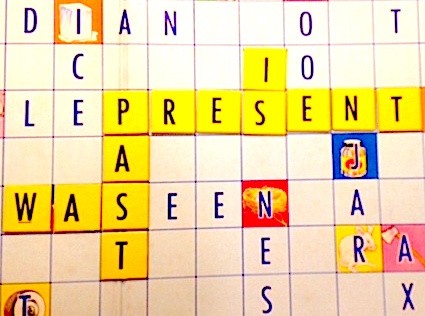
Revisting The Issue of Tense in Writing About Ancestors (October 22, 2020)
Five years ago today I posted a piece titled, "Was" or "Is" . . . What Tense Makes Most Sense For One's Ancestors? Just over a week ago, I received a comment on that post from someone identified only as "Mark A." Mark said, "I have just heard reference to an actual 'ancestor tense' - apparently used by native Americans when speaking of ancestors. I don't know which tribes, however; I merely stumbled across this while watching the film Home From Home by Edgar Reitz, where one of the characters discovers this while reading a book."
Mark's comment about a possible "ancestor tense" was intriguing and I spent a half hour or so trying to find more about this grammatical anomaly. I was unsuccessful in finding anything specifically referenced as an ancestor tense used by Native Americans of any tribe, but the idea stuck with me and caused me to muse again about the tenses we use when referring to ancestors–especially deceased ancestors. [The film that Mark referenced is actually a German film and apparently a character in the film makes some mention of an ancestor tense based on a book the character is reading. I have not as yet been able to find a place to watch the film myself and so at this point I just have Mark's observation to go by.]
The idea of having a grammatical tense to use specifically when discussing ancestors is fascinating and one wonders how it would work in practice and if any convenient analog could ever develop in English. But leaving that aside until more could be learned about any ancestor tense actually being used by Native Americans, I found myself re-reading my original post and the comments it generated. Now, having thought more on the subject, I am even more convinced that the best tense to use when referring to ancestors–living or deceased–is the present tense.
In musing more on the subject, I am convinced that accuracy and logic dictate the use of the present tense when discussing an ancestor . . . and perhaps especially when discussing a long deceased ancestor such as a 5X great grandparent, for example. Two new thoughts occurred to me:
(1) Due to the power of two, once one gets to talking about ancestors further back than grandparents, the number of individuals sharing the same relationship grows dramatically–as do the surnames involved. Biologically speaking, while each of us has two parents, we have four grandparents, and going back further we have thirty-two 3X great grandparents, five hundred twelve 8X great grandparents, 1,024 9X great grandparents . . . and on and on.
(2) In most cases, anyone above the great grandparent level while living would have had no inkling about our present existence, let alone any idea of a relationship to themselves. My 4x great grandfather, John Tew, Sr. who died in 1827, is one of my 32 4X great grandparents. There is no way that he could ever have envisioned the six generations, the marriages, and the intervening families that ultimately resulted in my birth and created a relationship to him. Perhaps more starkly, my 4x great grandfather on my mother's side, James Carpenter who died in 1812 (my mother's 3x great grandfather), would never have envisioned becoming the 4X great grandfather of someone named John Tew.
Taken together, the above two observations clarify why the present tense is perhaps the best tense to use when talking about ancestors. The logic of the present tense is captured in the use of the word "becoming" in the last sentence of paragraph 2 immediately above. When each of my named 4X great grandfathers was alive, he did not have any relationship to me because I did not yet exist and he could not have even imagined me. Each of them only became one of my many 4X great grandfathers after I was born (and when I discovered and confirmed our relationship).
At present I am one of the two grandfathers of my granddaughters and upon their births John Tew, Sr. and James Carpenter became two of their 6X great grandfathers (along with 126 other 6x great grandfathers). It seems both illogical and inaccurate to say that either of them "was" my 4X great grandfather (or my granddaughters' 6X great grandfathers) because it implies either that retationship existed back when they did exist (and it simply did not), or it implies that at one time they had the relationship of a great grandparent to me, but that the relationship somehow no longer exists if I should say "he was my 4X great grandfather." Once someone becomes a great grandfather, the simple, natural fact that he happens to be dead when one of his descendnats is born does not erase that relationship because he only became a great grandfather to that descendant when that remote descendant was eventually born. Looking at it another way, while I am presently a grandfather, there is no guarantee that I will ever become a great grandfather, let alone a several times great grandfather; but, if in the fullness of time and a continuation of generations from my grandchildren, when other descendants are born, then at that moment (and not before) I will become an ancestor and the relationship will be established so that those descendants for the first time can say John D. Tew is one of my ___ great grandfathers.
_ _ _ _ _ _ _ _ _ _ _ _ _ _ _ _
Image created by the author using the family's 1958 edition of "SCRABBLE For Juniors" manufactured by Selchow & Richter Co. for The Production and Marketing Company (the copyright owner).
_ _ _ _ _ _ _ _ _ _ _ _ _ _ _ _
Copyright 2020, John D. Tew
_ _ _ _ _ _ _ _ _ _ _ _ _ _ _ _
Saturday, October 17, 2020
Saturday Serendipity (October 17, 2020)
Here are some suggested reads for this weekend.
1. For those with early New England roots, Vita Brevis, the NEHGS blog, recently posted a teaser by Alicia Crane Williams. A gift of access to the digital manuscript collection of Barry E. Hinman (Emeritus Librarian at Stanford University) has been made to NEHGS. The material consists of draft pieces on his ancestors and includes some 600 drafts of his New England ancestors from Massachusetts, Connecticut, and Rhode Island. You can read more about this gift here.
2. James Tanner, of Genealogy's Star blog, shares his insight and musings on the digital divide and computer literacy as it relates to genealogy research. You can read his post here.
3. For those with connections to–or just and interest in Maine–The Weekly Genealogist of NEHGS highlighted an article in Downeast Magazine titled, "Why Maine Became a State (And Not a Commonwealth)." You can read the article here.
4. Those who have read this blog for any length of time know that I have long had a consuming interest in the Great Influenza of 1918 (mistakenly referred to as the "Spanish Flu" in my opinion). I have blogged about it several times since the first post in 2013 (see "Influenza" in the topics list). I read everything I come across about the 1918 pandemic. Recently Molly Charboneau, of Molly's Canopy blog, posted an introductory piece about the beginning of the flu pandemic that eventually killed her Uncle Albert. A follow-up future post about the spread of the flu is also planned. You can read Molly's post and get a link to her post about her uncle's death by going here.
5. Deep Work, learning by osmosis, mind mapping, outline thinking, and being a stalk of celery in a water glass receiving a drop of blue food dye. . . intrigued? So was I. Jacqi Stevens of A Family Tapestry blog, muses on different learning styles and how to cope with trying to do concentrated, focused work while retaining the ability to explore without getting lost. Read "Off the Shelf: Deep Work" here.
6. If you are not familiar with early Colonial-era town pounds and the function and revenue source they represented, then you should read Heather Rojo's post at Nutfield Genealogy, where you can also surf links to the other posts in her series on town pounds. This week Heather highlights the 1774 Town Pound of Loudon, New Hampshire. See it and read about it here.
STAY HEALTHY, STAY SAFE, AND PROTECT OTHERS -- WEAR THAT MASK!
_ _ _ _ _ _ _ _ _ _ _ _ _ _ _ _
Copyright 2020, John D. Tew
_ _ _ _ _ _ _ _ _ _ _ _ _ _ _ _
Saturday, October 10, 2020
Saturday Serendipity (October 10, 2020)
Friday, October 2, 2020
Censored! A World War II "V . . . – Mail"
Saturday, September 19, 2020
Saturday Serendipity (September 19, 2020)